The Nuclear Reactor
Proximity Creates Attraction — the Science Is Not Soft
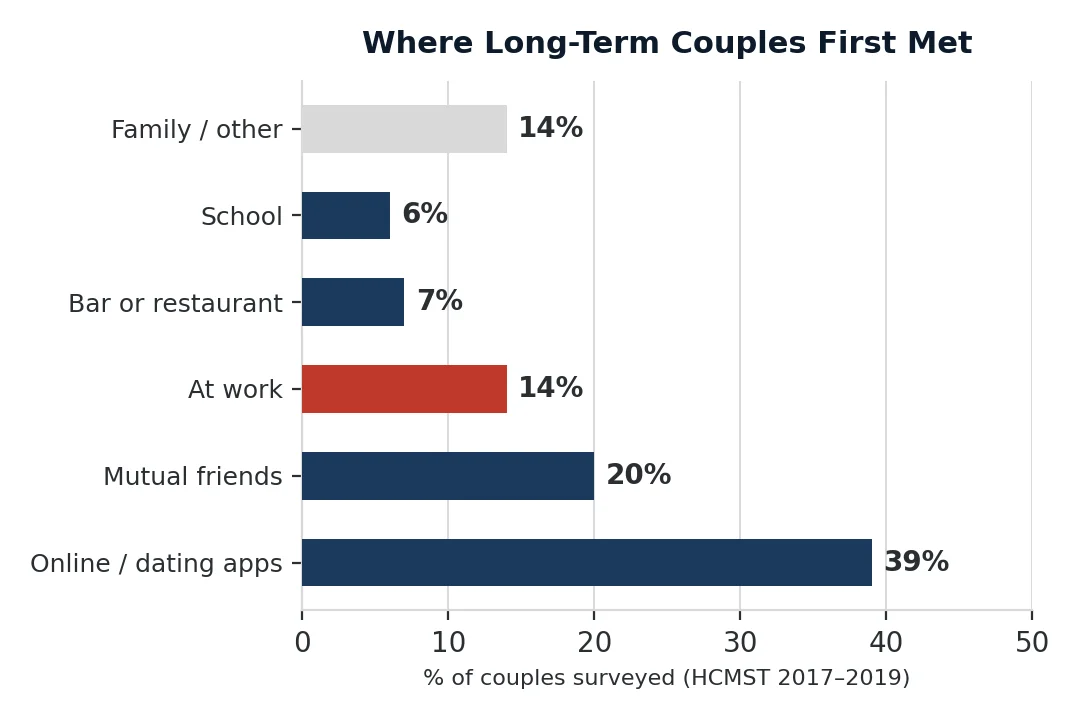
Most of It Never Converts — and the Job Is Better for That
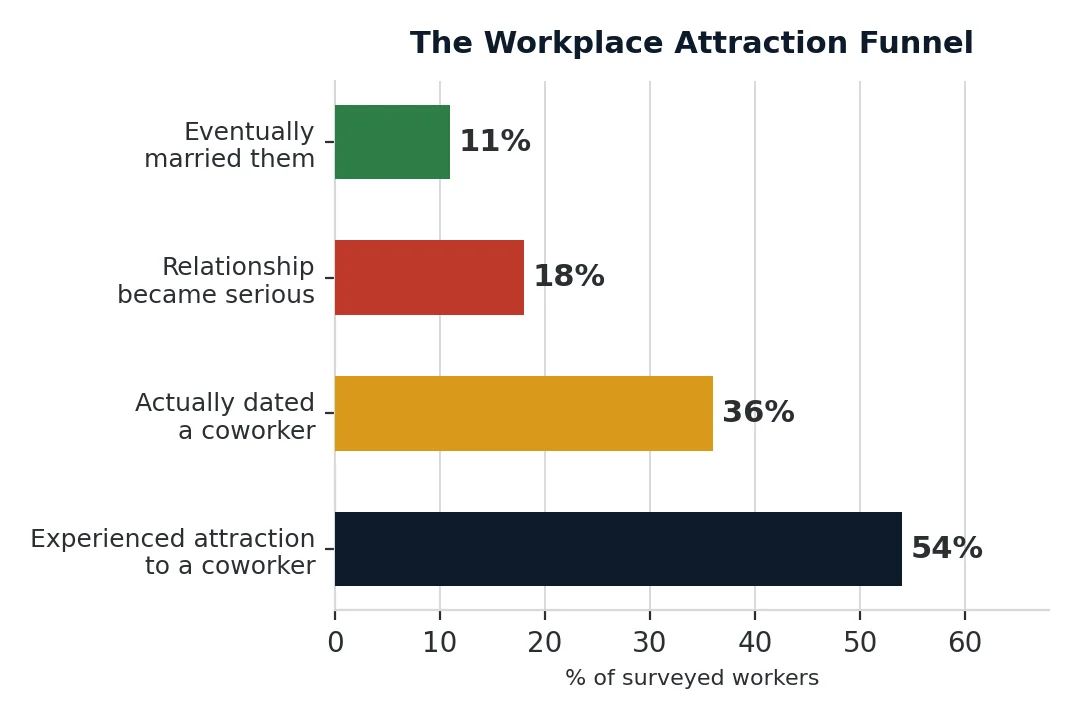
The Risk Architecture — Variance, Not Probability
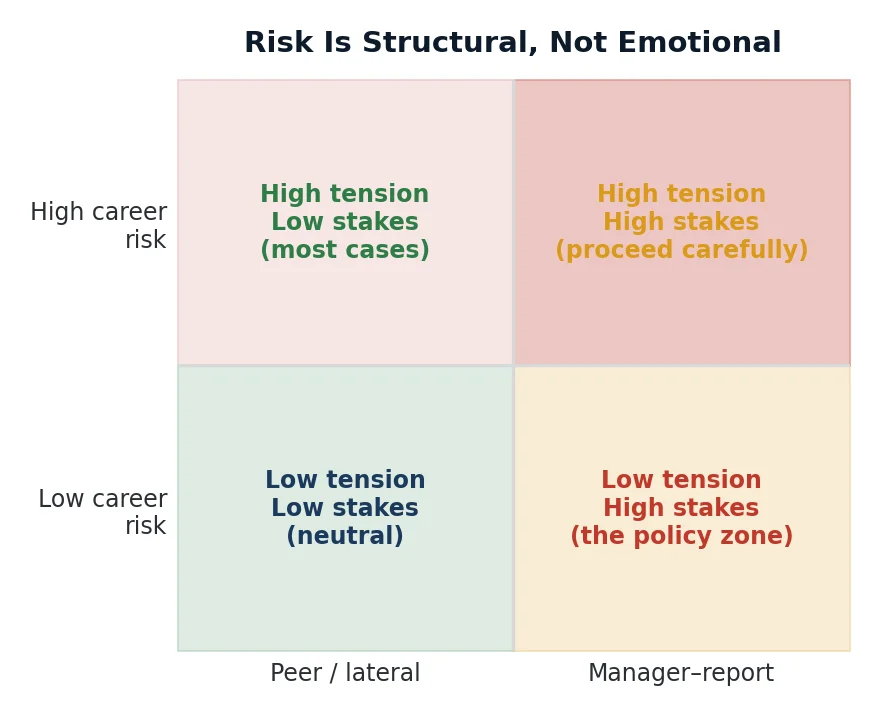
- This is a variance problem, not a probability problem. Most workplace relationships don’t ruin careers — but when they do, the damage is asymmetric and rapid. The right question is not “will this work?” but “am I willing to restructure my professional life if it doesn’t?”
- Power dynamic is the primary structural variable. Peer–peer relationships have a very different risk profile than manager–report. Most company policies target the latter specifically — not out of moralism, but because the institutional liability is real and separate from whatever the individuals actually feel.
- Industry culture matters. A startup’s tolerance for blurred personal/professional lines is not the same as a hospital’s or a law firm’s. Know your environment before you know your intentions.
- Disclosure policies exist; use them. Post-2017, approximately 78% of Fortune 500 companies have some form of romance disclosure requirement. If one exists at your company and you’re in it, the cover-up carries more career risk than the relationship.
- Some power couples have dominated. The outlier successes are real — but they are outliers. The people who came out ahead had genuine alignment, managed perception carefully, and often worked in cultures tolerant of it. They also got lucky with timing.
Bottom Line
Romance is not a hard no in professional networks. But the energy that makes it possible is also what makes the job worth doing — and most of the time, the better move is to let it run the reactor.
The workplace generates genuine attraction because it is designed to: repeated proximity, shared purpose, and mutual evaluation are exactly the conditions under which human bonding evolved. Over half of workers have felt it with a colleague. Most never act. Of those who do, a meaningful fraction end up married — and a small but real fraction end up changing jobs. The expected value of acting depends entirely on two things: the structural risk (peer or hierarchical, disclosed or hidden, industry culture or policy environment) and the honest answer to one question — is this a possible forever thing? If the answer is yes, the risk calculus changes. If the answer is “I think so” or “maybe,” the reactor is probably better off running at operating temperature. The tension, managed well, is an asset. The meltdown is not recoverable.