1
Be Interesting by Being Interested
43:57
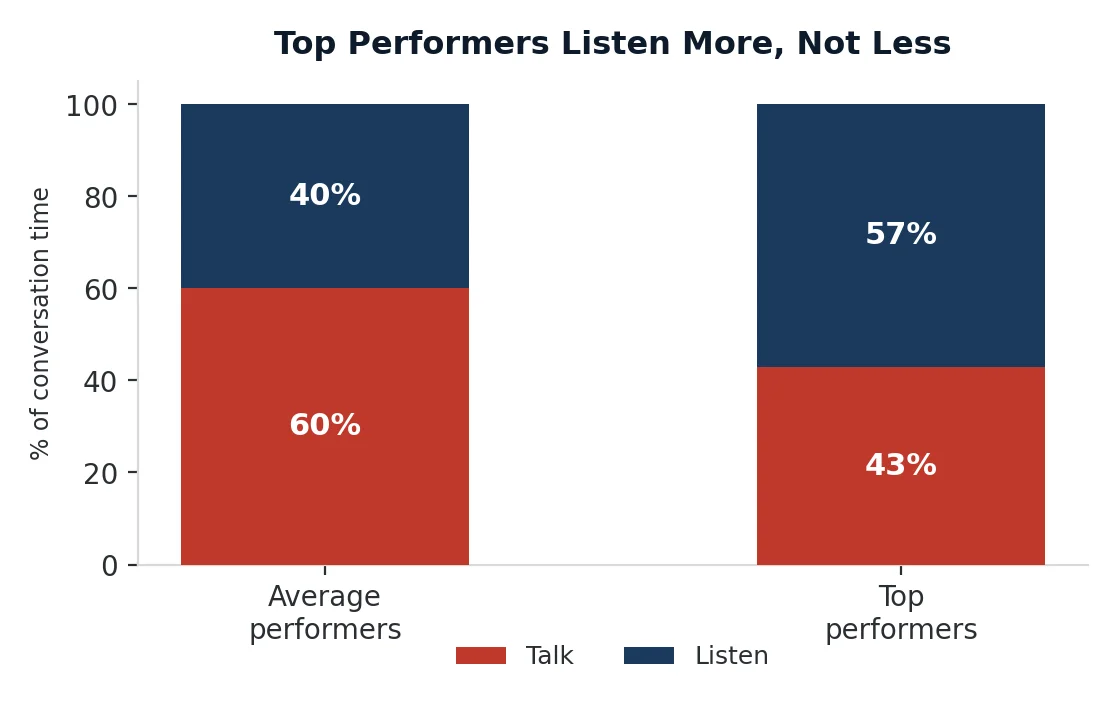
talk-to-listen ratio of top-performing salespeople — they talk less than the average performer, not more
Gong's analysis of 326,000+ B2B sales calls found average performers talk 60% of the time; top performers flip it, listening 57% of the time. That's the ratio when someone actually has something to sell. At a purely social networking event, the ratio should tilt even further toward listening.
Karen Huang et al. (JPSP, 2017) found people who ask more follow-up questions are reliably liked more by their conversation partner — in a speed-dating study, the number of follow-up questions asked predicted whether the other person wanted a second date. Being interesting at an event is mostly a function of being visibly interested in the other person.
2
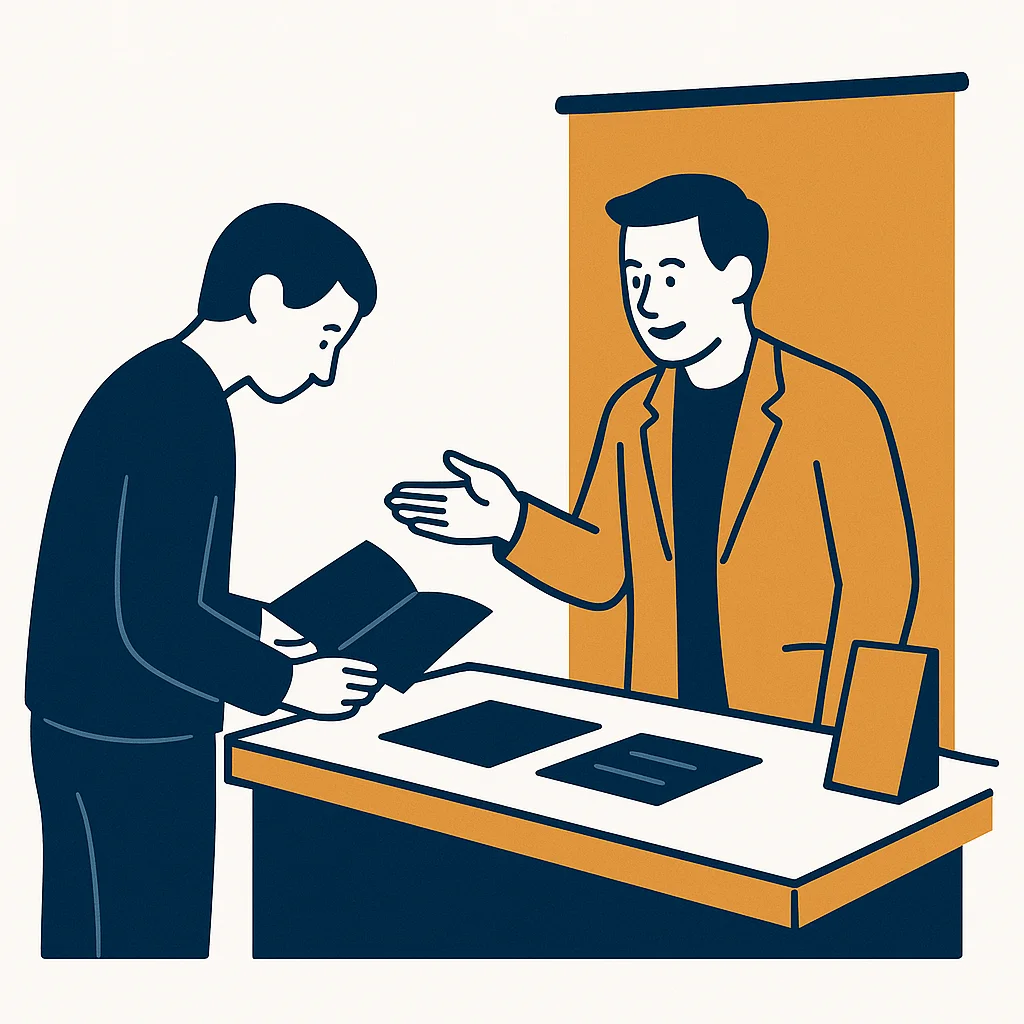
Don't Pitch the Booth — They Paid for That Spot
+23%
increase in tips from a single small, genuine, unprompted gesture — the classic demonstration of reciprocity
Cialdini's restaurant-mint studies: one mint with the check raised tips ~3%; two mints, ~14%; a server who left, then came back and said “for you nice people, here's an extra mint,” got +23%. The gesture mattered more than the mint.
A booth or table exists because someone paid for that spot specifically to pitch you. Reverse that flow and you're working against the structure of the room, not with it. Give before you ask, the same way the principle says to — a genuine compliment, a useful introduction, real interest in what they're showing. Synergies are the one real exception: if you have something that helps their specific business, that's an exchange you're proposing, not a pitch you're making.
80%
of trade-show and event leads never receive any follow-up at all
24–48 hrs
the window after which response rates fall sharply — leads reached this fast convert roughly 60% more often than those reached after a week
20–40%
typical conversion rate for the leads that actually do get a prompt, good follow-up — most of this value just goes unclaimed
CEIR / trade-show follow-up industry research; networking-event lead conversion benchmarks. The bar for “the person who actually followed up” is lower than it should be.
3
Working the Room, Practically
- Know which format you're in. A purposeful appointment runs business, then a little social warmth at the end. A networking event flips that — lead with social, let business surface naturally if it's going to.
- Don't pitch the people staffing a booth or table. They're working, and the room is built for the opposite direction. Genuine synergies are the exception — that's an exchange, not a pitch.
- Ask follow-up questions. It's the single most reliably documented way to be better liked in a live conversation, and it costs you nothing.
- Listen more than you talk — even the best closers do. If 57% listening is correct when you're actually trying to sell something, it's correct by an even wider margin when you're just meeting people.
- Follow up within 48 hours. Most people at the event won't. That alone puts you ahead of 80% of the room.
Bottom Line
Working a room well isn't a charisma trick — it's mostly restraint: listen more, pitch less, give before you ask, and follow up when almost no one else will.
The format matters: a business appointment with social color at the end is a different machine than a networking event, which runs mostly on social fuel with business as the byproduct. Inside either format, the same evidence points the same direction — the best-performing salespeople talk less than average performers, not more, and the simple act of asking someone a follow-up question is one of the most reliable ways on record to be better liked. A booth or table is a paid pitch surface running in one direction; respect that, and treat a genuine synergy as the rare, real exception rather than a workaround. None of this requires being the most charming person at the event. It mostly requires being the one who actually listens, and the one who actually follows up — since the data says most of the room will do neither.
Sources: Gong Labs, talk-to-listen ratio analysis of 300,000+ sales calls · Huang, Yeomans, Brooks, Minson & Gino, “It Doesn't Hurt to Ask: Question-Asking Increases Liking,” Journal of Personality and Social Psychology (2017) · Cialdini, Influence: The Psychology of Persuasion, restaurant-mint reciprocity studies · CEIR and industry trade-show follow-up research; networking-event lead-conversion benchmarks. Follow-up conversion figures are widely-cited industry estimates rather than a single controlled study.